






World Prematurity Day?? A medical marvel in 26 weeks

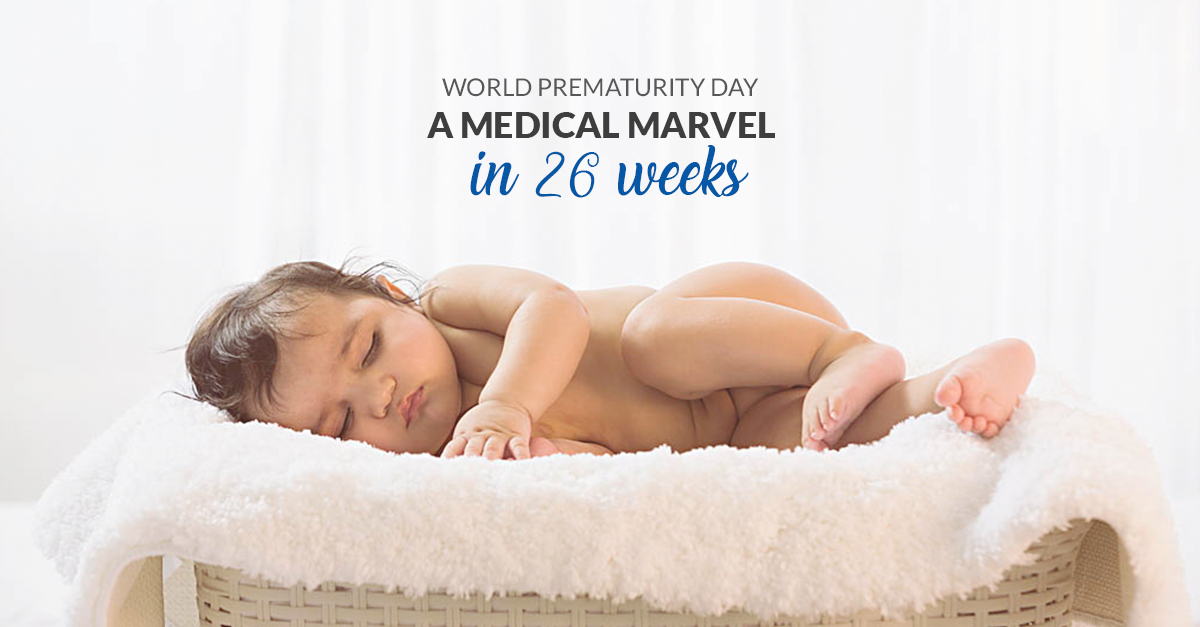
Giving birth to a beautiful and healthy child is a wonder in itself. Caring and nurturing for a premature baby is a herculean challenge, one that needs patience and belief. Most preemie babies are born before 37 weeks of gestation. However, in ShaliniŸ??s case, her gestation period was just 26 weeks weighing a meagre 820gm.

For mothers to be, the biggest fear is, having to give birth to a premature baby. The babyŸ??s organs are even formed. In the case of Shalini, the anxiety was more because, at just 26 weeks, the baby was too young to even breathe without help.

A state of the art NICU unit

At Motherhood, we understand this overwhelming feeling which is why our Neonatal unit is one of a kind. Our level 3 Neonatal Intensive Care Unit (NICU) is equipped to care for and nurture the tiniest and sickest of newborns. The well-qualified staff consists of world-class neonatologists, neonatal nurses and respiratory therapists who specialise in the care of newborns. Apart from caring for premature babies, the NICU unit also caters to babies born with serious illnesses.

An extremely difficult case of Shalini

Shalini had a previous case of abortion, and when she was around six and a half months pregnant with her current child, she had abdominal pains. Not willing to take a chance, Shalini rushed to Motherhood hospital. By the time she got there, her pain had increased, and the doctor informed her that she was having preterm labour pain. Shocked and surprised, Shalini had to be taken in for an emergency procedure.

ShaliniŸ??s bundle of joy weighed just 820 gms and was extremely weak. Seeing their baby, the parents were worried if their precious one will make it or not. Thanks to the top-notch care and attention given by Dr Prashanth Gowda, Neonatologist and Pediatrician, the 26 week premature baby recovered to the pink of health after a long, two month period at the NICU.

The parents are tremendously happy with the NICU team. They love the service of Motherhood Hospitals and would definitely recommend this hospital to their friends and family.

World Prematurity Day?? A miracle in 29 weeks

Pregnancy is the most magical time for all mothers to be. This nine-month period is that time where all mothers are anxious and excitedly awaiting the birth of their precious child. This period, however, was extremely short-lived for Priya. When she was in her 29th week of pregnancy; Priya saw some spotting and immediately knew something was wrong. She was admitted to the hospital and had to give birth to her child when she was just seven and a half months into her pregnancy.

Technology to the rescue

Thanks to the technological advancements, there are methods to mature a premature baby, and Motherhood’s Neonatal Intensive Care Unit (NICU) provides exactly that to the concerned parents of a preterm baby. Along with world-class respiratory equipment, monitoring equipment, feeding tubes, incubators and phototherapy, Motherhood’s NICU also offers the love and care every premature baby needs to grow and develop into a healthy and fit little one, ready to conquer the world.

Our level 3 Neonatal Intensive Care Unit (NICU) is equipped to care for and nurture the tiniest and sickest of newborns. The well-qualified staff consists of world-class neonatologists, neonatal nurses and respiratory therapists who specialise in the care of newborns. Apart from caring for premature babies, the NICU unit also caters to babies born with serious illnesses.

The unique case of Priya

When Priya concieved, she was also undergoing treatment for had polycystic ovary syndrome. She was admitted midway through her pregnancy because the baby’s heartbeat was falling and there was less fluid around the baby. Furthermore, the placenta, an organ that develops in the uterus during pregnancy, had completely separated. It is the placenta that supplies oxygen and nutrients to the growing baby and takes away waste products from your baby’s blood. This complication called for an immediate C-section.

Most premature kids are born before 37 weeks instead of the usual 38 to 42 weeks, and Priya’s case was further complicated as her gestation period was just 29 weeks. The vital organs of the baby mature only between week 29 and 30. So when Priya gave birth, the baby weighed just 1kg 220gm and had to be given special care for over a month at the NICU as the baby had Respiratory Distress Syndrome.

Dr Prashanth Gowda was the primary consultant and ensured that the baby and the mother received the best care and treatment. After rigorous medical care, the baby was finally discharged on 9/7/2017 and is doing extremely well. They are in perfectly good health now, and the parents are well satisfied with the NICU team and the services of Motherhood hospitals.

World prematurity day?? Giving birth to preemie in 30 weeks of gestation

Premature birth at 30 weeks: A journey of strength and resilience - Motherhood Hospital India

Giving birth to a baby is a miracle on its own. However, giving birth to a premature baby and nurturing it to good health, with utmost care, patience and love, is a whole different league. One such story is that of Neha who gave birth to her little one at 30 weeks of gestation. Needless to say, Neha and her partner were on the verge of breaking down when they learnt that they were going to give birth to a premature baby.

NICU procedures and equipment

In todayŸ??s day and age of technological growth, there are a plethora of procedures and top-notch equipment available to help nurture a premature bay into the pink of health. MotherhoodŸ??s Neonatal Intensive Care Unit (NICU) provides exactly that to the concerned parents of a preterm baby. Along with world-class respiratory equipment, monitoring equipment, feeding tubes, incubators and phototherapy, MotherhoodŸ??s NICU also offers the love and care every premature baby needs to grow and develop into a healthy and fit little one.

Furthermore, Motherhood has a level 3 NICU which is equipped to take care and nurture even the smallest and sickest of babies. Apart from premature babies, the level 3 NICU also focuses on taking care of newborns with dangerous illnesses. The staff which works around the clock to ensure the babies get nothing but the best include renowned neonatologists, experienced neonatal nurses and certified respiratory therapists.

Care and treatment for preterm babies

MotherhoodŸ??s NICU is one of the most-preferred hospitals to take care of preterm babies. In NehaŸ??s case, her preterm baby was born is 30 weeks of gestation with a birth weight of just 1 Kg 200 gms. Due to the preterm delivery and RDS, the newborn had to be admitted in MotherhoodŸ??s NICU and nurtured to health for more than a month.

The mother came with the history of 7 and half months of pregnancy with the history of previous caesarian section and she had a cervical stitch in view of a uterine anomaly. She had leaking of amniotic fluid and very little fluid around the baby. She underwent an emergency caesarian section and the baby needed an NICU admission with previous lSCS. This led to Neha having cervical stitches in situ with a bicornuate uterus (Recurrent pregnancy loss), premature rupture of membrane and anhydramnios (lack of amniotic fluid). Due to this condition, NehaŸ??s newborn had to be kept in MotherhoodŸ??s NICU. However, with the help of advanced technology, support and care provided by the sisters and doctors at NICU, the baby is now doing well. According to Dr. Prashanth Gowda, Consultant Neonatologist and Pediatricians, the baby is healthy with normal neonatal screening and age appropriate developmental milestones. NehaŸ??s little one was discharged on 8th of April, 2017, and is doing fine post discharge. Dr. Prashanth Gowda also adds that the bundle of joy is in perfectly good health and the parents are very happy with the NICU team, the doctors and management at Motherhood hospitals.

World Prematurity Day?? Giving birth to premature twins

World Prematurity Day Giving birth to premature twins

Sapna was in a bitter-sweet sense of state when she was rushed to the hospital to give birth to her first set of twins. Sweet, because she was anticipating this day from the moment she saw the faint red line on the home pregnancy kit. She was going to meet her babies after months of nurturing them in her womb. Bitter, because she was being rushed for a caesarian, 33 weeks after conceiving. She knew she was going to give birth to not one, but two premature babies, and the thought of them not being healthy enough to survive was killing her inside.

The miracle of childbirth

Many such mothers face the fear of giving birth to their children well before they are completely formed. The thought of giving birth to a premature baby and nurturing them to good health in the neonatal wing of a hospital is quite frightening. At Motherhood, we understand this , which is why our Neonatal team ensures care is delivered with compassion to both babies and their parents.

Our level 3 Neonatal Intensive Care Unit (NICU) is equipped to care for and nurture the tiniest and sickest of newborns. The well-qualified staff consists of world class neonatologists, neonatal nurses and respiratory therapists who specialize in care of newborns. Apart from caring for premature babies, the NICU unit also caters to babies born with serious illnesses.

Care and treatment for premature twins

In Sapna’s case, both her babies were premature, with one having the birth weight of 1 Kg 400 gms and the other at 1 Kg 100 gms. Due to preterm delivery and RDS (Respiratory Distress Syndrome ), the babies had to be admitted to the NICU of Motherhood Sarjapur Road. Dr. Prashanth was the primary Neonatologist along with Dr. Quazi Fazal Ali and other NICU team members. The baby whose birth weight was 1 Kg 100 gms had to be in the NICU for almost one and a half months and the other baby for more than 15 days.

Sapna had already undergone a premature childbirth at 33 weeks and 3 days of gestation with severe preeclampsia, which led to keeping the baby in the NICU. However, pre-term twin babies are a whole different league. Though the care given to preterm twins is the same, managing your emotions and preparing yourself to care for your preterm babies is the biggest challenge. We, at NICU, are elated that Sapna and her partner left no stone unturned in following all instructions provided to them.

According to Dr. Prashanth Gowda, Consultant Neonatologist and Pediatrician, the babies are now doing extremely well, both physically and developmentally, because of the utmost sincerity and patience shown by the parents. The babies got discharged on 17-08-2017 and 25-07-2017 and are doing phenomenally well. They are in perfectly good health now and the parents are well satisfied with the NICU team and the services of Motherhood hospitals. They also added that they would definitely recommend Motherhood to their close friends and family, to welcome their offspring to this world through professional and trust-worthy hands.

Fruits and veggies on your table Makes your health Stable

Fruits and veggies on your table Makes your health Stable

Nutritional tips for Toddlers:

  • Introduce only one food at a time, giving only small amounts at first
  • Increase variety slowly
  • Introduce all food groups.
  • Give an extra dash of fat in one or two items.
  • Do not use excessive fat, salt and sugar.
  • Prepare bland and non-flavoured items. Fried food, highly spiced, and highly flavoured foods are not liked.
  • Consistency should be gradually built from liquid to semi-solid and then solid.
  • Particle size of gruels should be built gradually from homogenized khichidi, to well mash to a thick khichidi.
  • Quality should be gradually increased.
  • If the child dislikes or disinterested, discontinue the food for some time and re-introduce later. Do not force feed. No food is indispensable or best.
  • Parents should avoid personal prejudices, likes and dislikes in front of children. Rather they should eat a variety of foods and encourage children to do same.
  • Identify intolerance and immediately discontinue. CowŸ??s milk, egg white, soybean etc. are known to cause allergies. Cereals which least allergy is rice and the pulse which causes best tolerance is moong dal.
  • Avoid fibre, whole legumes and raw vegetables with their high fibre content foods recommended for adults but not for infants.
  • Some complementary foods need special preparation such as ARF (amylase rich foods) or mashed potato or banana.
  • Prevent inclusion of junk foods, which provide only energy. Too many sweets biscuits, baked products like cakes and pastries, which have refined flour and sugar can cause dental caries.
  • Avoid nibbling. Have a 5-6 meal pattern. Keep gap of 3 hrs.Ÿ??, and encourage the physical activity and play to prevent obesity.
  • Meals should be attractive and served with care and personal attention.
  • Too much attention at meal time only makes child to achieve their ends. Healthy meal time environment of the family helps in good eating habits.

By Saraswathi Usha, Sr. Nutritionist Motherhood Indiranagar

Skin and hair care in monsoon by Dr Arun Kumar

Natural immune resistance in the body is decreased during monsoon. Apart from common infections like flu, common cold, dysentery asthma, skin problems like the allergic rash, atopic dermatitis, dry skin eczema, fungal infections, acne, prickly heat are common. Dry scalp, dandruff, itchy scalp, hair fall are common too.

Damp and humid weather in monsoon, attracts more microbes and fungi, resulting in skin rashes to ringworm etc. The season tends to infect the air, atmosphere surroundings, foods, and drinks. While skin changes during pregnancy are common, your skin and hair are also affected from the harsh treatment of the moist humid rainy weather.

Skin care in monsoon:

  • Drink lots of water, 2-3 liters per day, water consumption hydrates your body and flushes out all the unwanted toxins.
    • Use a soap free cleanser for washing your face, wash gently 2-3 times a day.
    • Mild organic face scrubs twice a week.
    • Dap dry the face, body, towel usage roughens the skin.
    • Alcohol-free toner to maintain PH balance.
    • The humidity leads to dry skin, use a nourishing moisturizer to keep your skin soft supple and healthy.
    • Use a water based moisturizer for oily skin.
    • Use a reliable sunscreen with a good SPF, it may be cloudy but that doesn’t stop sun’s UV rays causing skin damage.
    • The homemade facial pack is preferred.
    • Waterproof light makeups are the better choice.
    • Prevent the lip cracking moisturizing lip balm with SPF.
    • Apply moisturizer twice a day for the entire body.
    • Facial and bleaching should be avoided or at least limited as it makes the skin rough.

Hair care in Monsoon

  • Monsoon is the time of humidity which creates itchiness on the scalp. It is recommended to have a warm coconut oil massage which will help to get rid of itchiness. If there is dandruff in the scalp, massage with neem oil.
    • Mild anti dandruff shampoo diluted 1:1 ratio in water weekly once or twice to clean the scalp.
    • Prevent the hair from getting drenched in rain, but if does happen it is best to shampoo the hair as soon as possible and then dry them.
    • Monsoon season demands a conditioner after a mild gentle shampoo.
    • Hair coloring must be avoided during the rainy season.
    • Natural herbal products are better than heavy chemical shampoos in rains as they help to maintain the shine and natural look of the hair.
    • Try the hairstyles that are more natural in look than elaborate ones.
    • Avoid blow dryers and try to dry hair with a towel to retain the moisture.

Some do’s and don’ts to tackle fungal infection

DO’s

  • Regular bathing, body cleaning is the must..
  • Before wearing clothes, drying out the folds area to prevent excess moisture wearing loose fitting clothes.
  • Laundering clothes of an infected person in hot water and washing with the antiseptic agent.
  • Drying clothes in sunlight for at least 2 hours wearing clothes after ironing them and placing them separately.
  • Washing your hands with anti-septic and water frequently. Keeping hair, nails and scalp clean.
  • Wearing well ventilated shoes with cotton socks not sharing comb and other utilities with other family members.

DONT S

  • Occasional bathing using towel used by other members of the family wearing clothes immediately after bath washing personal clothes with family members clothes.
  • Wearing clothes dried under the fan and without ironing them, wearing tight jeans, leggings, sharing comb and other utilities with family members.
  • Scratching on lesions and not washing hands, keeping hair, nails, and scalp filthy walking barefoot in public places.

Dr. Asha Hiremath Critical Case 1

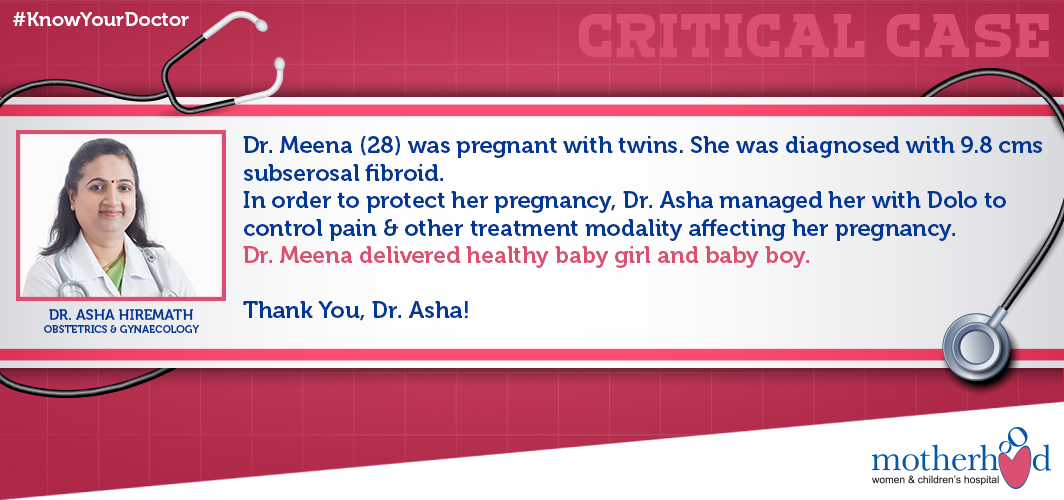
28-year-old Dr. Meena dentist by profession, diagnosed pregnancy for the first time. She had to undergo treatment for primary infertility which was successful & was diagnosed with twin pregnancy.

She was extremely happy when her pregnancy was confirmed but unfortunately, she complained of pain in abdomen on & off. She was diagnosed with a fibroid (lump in uterus) about 9.8 Cms subserosal fibroid. In order to protect her pregnancy, we had to manage her with Dolo 650mg to control pain & any other treatment modality could affect her pregnancy. She was managed safely until 39 weeks & was delivered by LSCS healthy girl baby of 2.56kg and 2.93 Kgs boy baby born.

Dr. Asha Hiremath Critical Case 2

Dr. Asha:Expert Insights on Critical Cases - Motherhood Hospital India

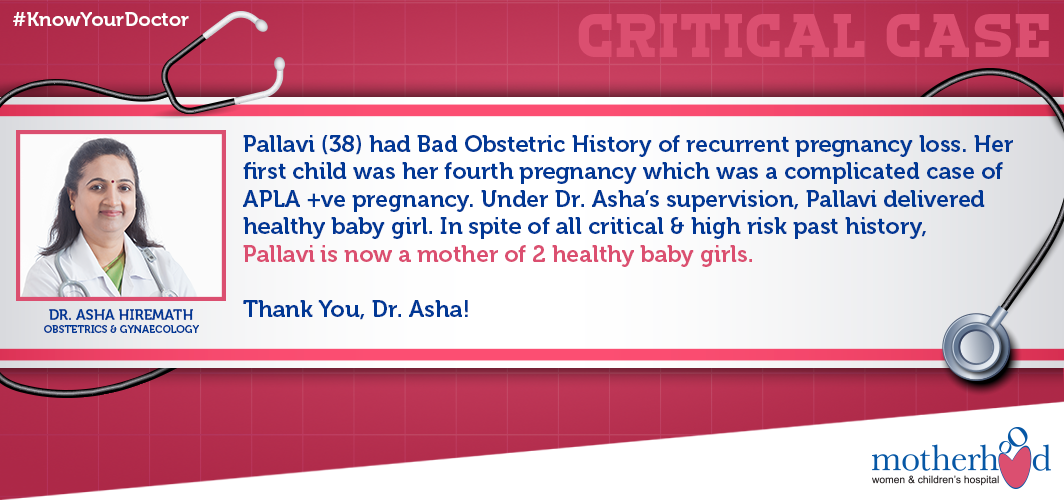
38- year elderly lady Mrs. Pallavi with BOH- Bad Obstetric history of recurrent pregnancy loss. She previously had 3 spontaneous abortions all within 1-2 months of early pregnancy.

Her first child was her fourth pregnancy which was a complicated case of APLA positive pregnancy, (Antiphospholipid Syndrome). This is an auto immune disorder, considered as high-risk obstetrics patients. She was evaluated sonographic, monitoring & medication was initiated & completed her term pregnancy, she was asked to be delivered by LSCS with a 3.4 kg healthy baby girl.

2 years later she conceived again and in spite of all critical & high risk past history, with supersize anticoagulation therapy, proper counselling & intense monitoring she successfully delivered her second child 3kg health girl child.


Dr. Asha Hiremath

Obstetrics & Gynaecology

Dengue and Malaria Beware of the Fever During Pregnancy

Monsoon is the season where everyone starts enjoying their life. This season gets the child out in you. Many wants to play in the rain water, get drenched in the rain and the list goes on. Yes, enjoying is one part of monsoon. But getting ready to fall sick is another aspect which everyone needs to be careful during this season.

Dengue, Malaria, Chikungunya, Swine flu are common in the monsoon season. In the last 2 -3 years, there is a sudden spurt in the dengue cases everywhere. Most of the time hospitals will be completely filled with dengue patients and they turn away the patients because of the unavailability of the beds. But fever like dengue, malaria and swine flu could be dangerous during pregnancy if the care is not taken properly.

Dengue infection in pregnancy carries the risk of haemorrhage for both the mother and the new-born. Also there is a serious risk of premature birth and fetal death. In the case of infection developing close to the delivery time, there is a risk of vertical transmission.

Similarly malaria and swine flu during pregnancy can lead to miscarriage, congenital infections etc. Malaria can also cause anaemia in pregnant women and may result in convulsion, kidney failure. So it is important to monitor for dengue, malariaand swine flu during pregnancy.

Measures to be taken to avoid dengue, malaria and swine flu

  • Don’t travel to areas where dengue, malaria are prevalent
  • Keep your surroundings clean. Close the window in the morning and evening to avoid mosquitos entering the house
  • Wear protective cloths like long pants, long sleeve dresses
  • Use bed nets, preferably treated with an insecticide to prevent mosquito bite.

Simple treatments which a pregnant women can follow during dengue, malaria and

  • Drink plenty of fluids like water, fresh juice, coconut water. This will help to prevent dehydration.
  • Avoid taking medicines like aspirin for fever. This may lead to bleeding and other complication
  • Antipyretics helps to manage fever and body pain.
  • Meet the physician as early as possible.

World Hepatitis Day

28th July is recognized as World Hepatitis Day; and today we would help you understand the common causes and Effect of Hepatitis in Pregnancy.

Hepatitis is an infection and inflammation of the liver caused by a virus. Jaundice during pregnancy is mainly caused by Hepatitis.

Normally, being pregnant will not hasten the disease process or make it worse, unless a woman has hepatitis E.

Most of the times pregnant women are completely unaware that they have been infected with a hepatitis virus. Usually this is because any symptoms of the illness may only be felt or at times there are no symptoms at all. Good antenatal care and blood screening are important during pregnancy, to avoid and cure it at an early stage.

The common types of Hepatitis are:

Hepatitis A :

Hepatitis A is transmitted by the oral-fecal route, such as from contaminated water or diapers. The main treatment is rest and a nutritious diet, and usually the woman will recover within a month or two. If a newborn is exposed, the infection is usually mild and they will have a lifelong immunity to the disease. If a pregnant woman gets exposed, she will be given immune gamma globulin (IG) to help protect her from getting the disease. It is always recommended to the pregnant ladies who plans a travel to get immunized.

Hepatitis B:

Hepatitis B is one of the most highly transmitted forms of hepatitis from mother to child around the world. Usually, the disease is passed on during delivery with exposure to the blood and fluids during the birthing process.

When the infant is born, the newborn will receive hepatitis B immune globulin at birth, and should be vaccinated with a hepatitis B vaccine at one week, one month, and six months after birth.

Hepatitis C:

Hepatitis C occurs if a person is exposed through transfusions, contaminated needles, or injected drug use. Mostly women become pregnant during the years between 20 and 40, which is also the age group in which the incidence of hepatitis C, hence screening for hepatitis C before and during pregnancy is done. The risk of a pregnant woman passing the hepatitis C virus to her unborn child is generally low and has been related to the levels of quantitative RNA levels in the motherŸ??s blood.

Hepatitis E:

Hepatitis E is a rare and sporadic viral infection of the liver. Its risk of transmission is highest in regions where there are low standards of sanitation. It is transmitted via the fecal-oral route through contaminated water. When this illness affects pregnant women, they may experience a more severe form of illness, which may possibly lead to acute liver failure.

1. What are the signs of hepatitis during pregnancy?

Common signs of Hepatitis are:

  • Nausea and vomiting
  • Loss of appetite
  • Fever
  • Abdominal pain
  • Yellowing of the skin and the whites of the eyes.

The problem is, depending on the type of virus, symptoms might not show up for months after infection, or you may have no symptoms at all.

2. How can we analyses that a person is infected with hepatitis during pregnancy?

Blood Test can indicate the presence of hepatitis. There are blood tests which can also show the liver condition.

3. How will hepatitis affect the unborn baby?

The baby would be fine throughout the pregnancy. Some risk factors involve only during the time of birth. ThatŸ??s why all pregnant women are tested for hepatitis B. If the test shows the mother has been infected, doctor will take steps to minimize the baby’s chances of infection.

Dr. Sireesha Reddy

Obstetrics & Gynaecology