







Publication: Sakal
Date: 13.04.2026
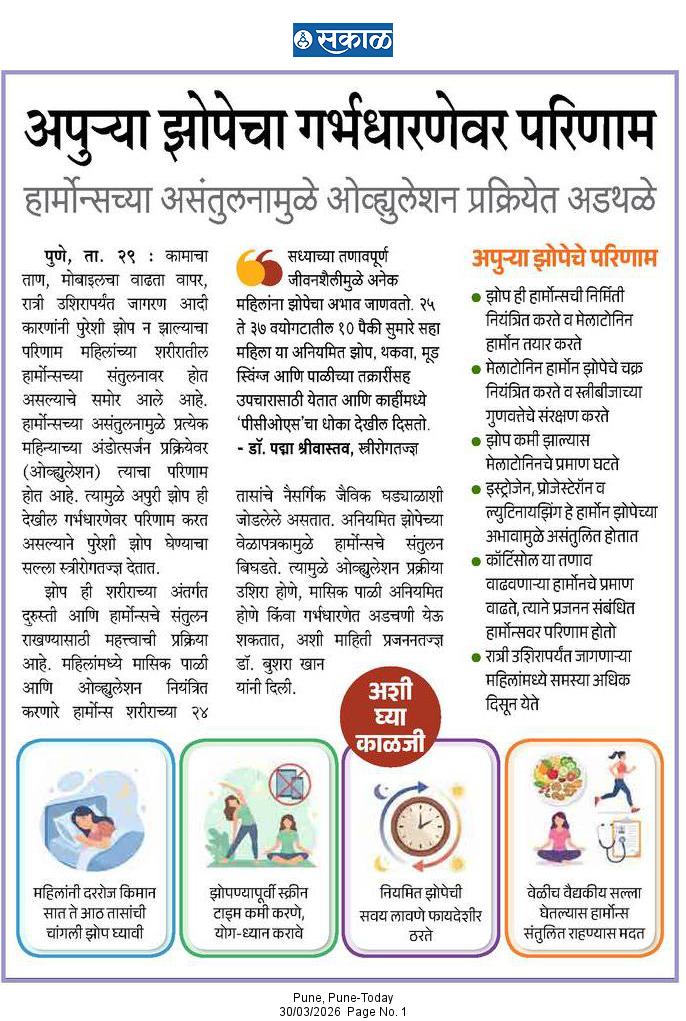
Highlights expert insights from gynaecologists and fertility specialists on how insufficient sleep is increasingly impacting women’s reproductive health and pregnancy outcomes. The article explains that modern lifestyle factors such as work stress, excessive screen time, and irregular sleep patterns can disrupt the body’s natural hormonal balance, directly affecting ovulation and menstrual cycles. It details how sleep plays a critical role in regulating key reproductive hormones like estrogen, progesterone, and luteinizing hormone, while also supporting melatonin production, which is essential for egg quality and overall fertility. The coverage further explores how sleep deprivation can elevate cortisol levels, leading to stress-related hormonal imbalances, delayed ovulation, irregular periods, and increased risk of conditions like PCOS. Additionally, it emphasises that consistent sleep of 7–8 hours, reduced screen exposure, and healthy bedtime routines such as yoga and meditation can help restore hormonal balance and improve reproductive health. The article reinforces the importance of prioritising sleep as a fundamental aspect of fertility and overall well-being.